
By Muchilwa Queen and Velvine Naliaka
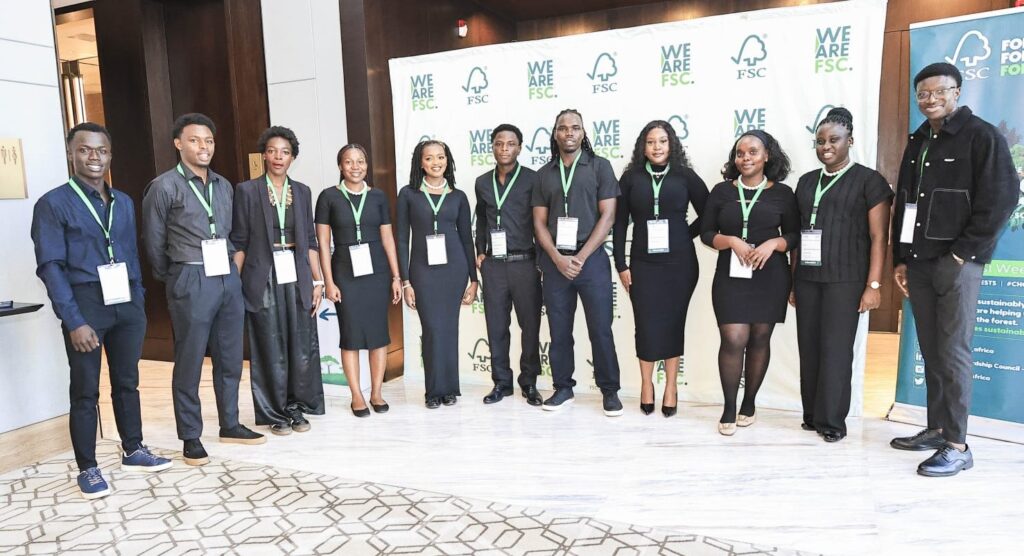
At USIU-Africa students get to explore a vibrant campus life that transcends classroom walls. They can participate in over 50 sports teams and clubs, among other offerings, that match their interests and passions. These engagements enable them to experience a life that goes beyond books and learn from the world around them. A testament to this is the Environmental Society (ENSO) Club. On February 10-12, twelve ENSO Club members attended the inaugural Zámba Heritage Congress held in Nairobi.
The Congress was convened by the Forest Stewardship Council Africa under the theme: From Commitment to Action: Africa’s Forest Legacy, bringing together governments, environmental experts, and development partners to discuss sustainable forest management, restoration, and climate resilience across the continent. Zámba represents Africa’s forest heritage and emphasizes that forests are public goods central to biodiversity, livelihoods, and economic transformation. The initiative promotes afforestation, reforestation, and innovative conservation financing to ensure Africa’s forests are sustainably managed for future generations.
Throughout the discussions, the importance of partnership and shared responsibility became evident, particularly in conversations around afforestation and reforestation. Ethiopia’s experience stood out. Having planted over 500 million trees, the country has adopted a communal approach where farmers and local communities actively participate in planting and caring for seedlings alongside government efforts. This collaboration strengthens survival rates and ensures forests continue to grow beyond initial planting.
The Zámba Heritage Congress highlighted carbon credits’ revolutionary potential in fostering value-added industries across Africa, presenting forests as engines of long-term economic prosperity. These credits enable nations to generate revenue from afforestation and reforestation programs by monetizing ecosystem services through creative conservation financing, boosting biodiversity, strengthening livelihoods, and creating long-term development. This approach elevates forests from mere public goods to high-value assets, allowing African governments, communities, and partners to participate in restoration while strengthening climate resilience for future generations.
The experience reminded the attendees that meaningful environmental change depends on collective action. Just as communities work together nationally, students, too, have a role to play in greening the university and contributing to a more sustainable future.