
By Esther Mogaka
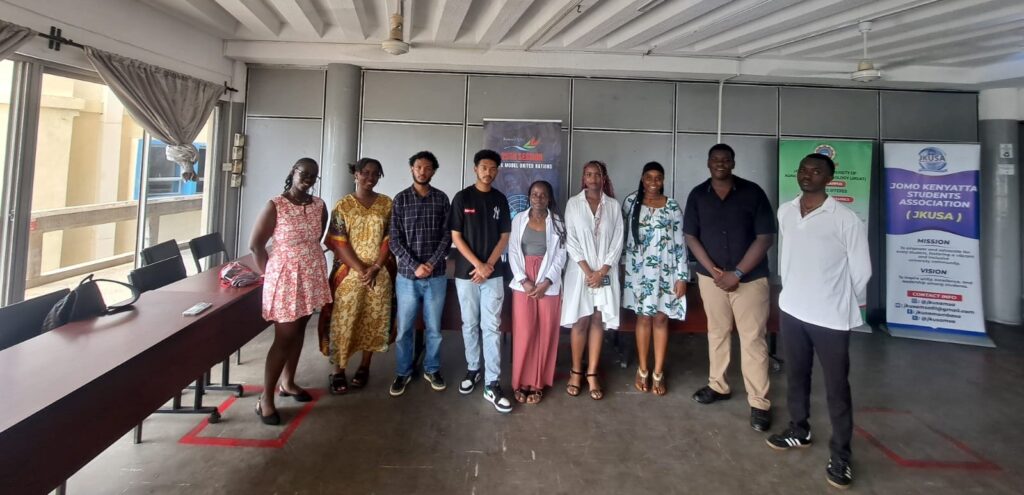
On January 22-25, the Kenya Model United Nations (KMUN) Club participated in the Third Mock Debate hosted by Jomo Kenyatta University of Agriculture and Technology (JKUAT) at their Mombasa CBD Campus. Under the theme: Conservation of Marine Life: Balancing Development, Rights, and Sustainability in Developing Nations, the debate brought together students from multiple institutions in an innovative General Assembly (GA) and International Law Commission (ILC) crossover format, creating a unique platform for legal and diplomatic discourse on one of the most pressing environmental challenges.
This Third Mock Debate centered on the intersection of marine conservation, economic development, and human rights, issues particularly relevant to Kenya’s coastal economy. The debate was structured around three critical pillars that formed the foundation of all discussions throughout the conference. The first pillar examined Sustainable Development versus Marine Protection, exploring the tension between economic growth and environmental conservation. The second pillar addressed Indigenous and Coastal Community Rights, focusing on the human dimension of marine policy. The third pillar tackled Accountability and Governance, establishing legal frameworks for enforcement and responsibility.
The event introduced a crossover debate format where GA Delegates and ILC Commissioners worked together in joint sessions. This unique approach allowed participants to experience both diplomatic advocacy and legal architecture, simulating real-world international negotiations where policy and law must align.
By hosting the event in Mombasa, participants engaged with the debate theme in an immersive coastal environment, providing firsthand context to discussions about marine ecosystems, coastal communities, and the blue economy. The four-day coastal experience enhanced the educational impact of the conference, allowing delegates to witness the very environments they were debating about. The proximity to the ocean and coastal communities gave weight and reality to discussions that might otherwise have remained purely theoretical. This connection between place and purpose created a memorable learning experience that transcended traditional classroom settings.
USIU-Africa’s participation demonstrates the university’s commitment to experiential learning and inter-university collaboration.