
By Prof. Caren Ouma
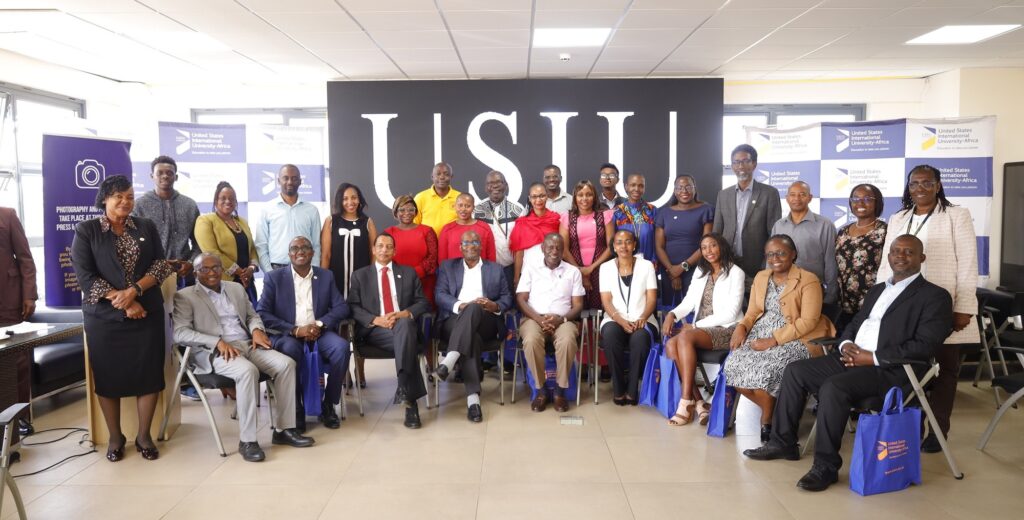
On January 28, the Chandaria School of Business (CSOB) held a stakeholders’ workshop for the revamp/review of the Bachelor of Science in International Business Administration (IBA) program. The aim of the workshop was to receive harmonized feedback from the stakeholders about the curriculum’s relevance, delivery challenges, emerging trends in international business education, and gather recommendations for improvement. The workshop brought together employers, faculty from other higher learning institutions, alumni, representatives from professional bodies, and faculty & staff.
Professor Amos Njuguna, Deputy Vice Chancellor – Transformative Teaching, Learning and Research, launched the workshop with insights about the dynamic forces in the environment that require critical thinking to be incorporated in the courses being taught in the IBA program. Professor Timothy Okech, Dean of CSOB, and Professor Juliana Namada, Chair of the Department of Business Administration, also weighed in with their insights about the significance of this process in the Chandaria School of Business.
This was followed by the presentations made by the team appointed by Prof. Okech to spearhead the review/revamp process. The team was led by Professor Caren Ouma, Professor of Leadership and Management, as the chair, 8 core team members, and 2 internal reviewers. The report was mainly informed by a meticulous and in-depth research investigation conducted in the Summer and Fall Semesters of 2025. Major highlights of the presentation included: Background information of the IBA Program before revamp/Review, inclusive of core objectives, curriculum foundations, its program learning outcomes, academic structure, and degree requirements; Methodology, which included diverse team composition, the school’s internal reviewers, holding several meetings, review of documents, stakeholders’ engagement via surveys, data analysis methods, workshops to review the report, and school presentation to review the report; and Results and Findings focused on improvement regarding; curriculum relevance, industry linkages, specializations, learning environment, delivery and support, and soft skills.
The report also included the following recommendations, enhance practical learning through stronger industry linkages, internships, fieldwork, and real-world projects; introduce research-focused courses to build data-driven decision-making skills; integrate emerging technologies such as Artificial Intelligence (AI), Internet of Things (IoT), and blockchain into the curriculum; strengthen soft skills development, including critical thinking, negotiation, emotional intelligence, and academic writing; make the program more inclusive and flexible by offering online and blended learning options to better accommodate working students; conduct regular curriculum reviews informed by industry needs and stakeholder feedback; and benchmark with local, regional, and global institutions to adopt best practices and innovations in curriculum design and delivery.
Incorporating these recommendations will strengthen the IBA program’s quality, relevance, and competitiveness, ensuring graduates are market-ready, adaptive, and equipped to navigate the dynamic international business landscape.